https://distrokid.com/videos/watch/mv-1Rs9vIh8B

White lies, is not a Book of or about Hate.
It’s a Celebration of Africa and China’s Partnership.
A Celebration of the People, Culture and Resilience of the African Diaspora’s.
Chapter 1:
The Call of My Ancestral Land
“There are no chance meetings” Predestined.
When I moved to South Carolina, little did I know, this was the beginning of my trip back to Africa, Dejavu. I knew there would be a culture shock waiting for me. This state, which was once the epicenter of the slave trade in America, bore the weight of a history that could not be ignored. Every corner seemed to whisper stories of pain, resilience, and survival. The echoes of my ancestors, who had been shackled and stripped of their humanity, were palpable in the humid air. Like Marley said, “There is a natural mystic blowing in the air” The realization that I now lived in a place that had been the major beneficiary of slavery made my connection to the land both intimate and haunting. Living here created a sense of urgency in me—a burning need to dig deeper into the cradle of my being. I felt a pull to understand Africa, not as a distant, abstract concept, but as the origin of everything that made me who I am. I had to unearth the roots of my identity and confront the reality of what had been perpetuated on my paternal land. The devastation inflicted upon my people, culture, heritage, and psyche was not just a distant history; it was a present reality, living here. Shaping my consciousness and my place in the world. The more I learned about the history of Africa—its civilizations, its rich cultures, its vibrant languages—the more I realized the depth of what had been stolen. The cradle of humanity, my homeland, had been pillaged, Spoils of a war that never was. It’s people scattered like seeds across foreign lands. And yet, despite the trauma and fragmentation, there was resilience, and the unbroken spirits that called me back to my roots. As I stood on the soil of South Carolina, I felt the weight of this history, not as a burden but as a call to action. I knew that I could not remain silent any longer. Bob Marley’s words rang in my mind: Could this be love? The question lingered, challenging me to look beyond the pain and devastation to see the love that still existed—love for a homeland I had never seen, love for a people I had never met but felt deeply connected to. It was a love that demanded something of me, a response, an acknowledgment of the bond that transcends time and space. Marley also urged, Say something. In those simple words, I found a call to action. It was time to speak up, to reclaim the narrative that had been stripped away. It was time to say something about the threads that bound me to Africa—threads that had endured despite centuries of efforts to sever them. I knew then that it was my time to speak, to tell the story of my heart’s connection to Africa, to honor my ancestors and the resilience of my people. The most damage to my Psych, watching Tarzan. Tarzan’s “ungawa” was strictly a made-up word when it first appeared in the movies. But by chance, it’s also Swahili, with a couple of meanings, depending on inflection. “To unite” or “to join” is one translation. When I sit down and listen to the artist D Sharp song, “Desire” with the Drummer taking me back to my Village. It gives me back that which was stolen, my Identity and my Culture.

The Silent Curriculum: What I Wasn’t Taught in School
Introduction
The powerful lyrics of The Cars’ song, “You can’t go on thinking nothing is wrong,” resonate with me now more than ever. These words echo the sentiments I’ve carried for decades, especially when I reflect on my own educational journey. Fifty years have passed, and the realization has dawned on me: the education system failed me. This isn’t just my story; it’s a narrative shared by many who felt that their schooling did not prepare them for the world in all its complexity.
The Shortcomings of Traditional Education
Albert Einstein once expressed similar frustrations, famously noting that his teachers never taught him what he truly wanted to learn. He wasn’t alone in this feeling. In many ways, my experience mirrored Einstein’s. The curriculum was rigid, focused on rote memorization and standardized tests, rather than fostering curiosity and critical thinking. History, in particular, was sanitized, with key parts of our past either glossed over or omitted entirely.
Slavery, for instance, was a seldom-referenced word in all my history classes. The horrors and implications of this brutal institution were treated as a footnote in a textbook rather than a significant part of our nation’s history. If it hadn’t been for a real educator—one who saw beyond the curriculum—I might never have understood the importance of continuous learning or the value of the knowledge that wasn’t readily provided by the system.
The Importance of Lifelong Learning
This educator offered me a piece of advice that has stayed with me: “Even if you decide not to go to college, never stop learning. When you stop learning, you begin the process of dying.” These words, echoed by the wisdom of Einstein, have guided me through life. They motivated me to seek knowledge outside the confines of formal education, to question the narrative I was given, and to discover the stories that were left untold.
It was through this self-directed learning that I came to know about the great Emperor Menelik II of Ethiopia, a leader who successfully defended his country against colonial powers. I learned about Enoch, a biblical figure who is often overlooked in mainstream teachings. And I delved into the life of Hannibal, one of the greatest military commanders in history, whose story was barely mentioned in the classrooms I sat in.
The Need for Open Dialogue
Education isn’t just about the transfer of knowledge; it’s about fostering an environment where ideas can be discussed openly, where grievances can be aired, and where uncomfortable truths can be confronted. In a marriage, if there’s a gripe, it must be discussed. Ignoring a problem is like ignoring a tumor—it only grows, eventually becoming malignant. The same principle applies to education and the way we address our history.
In high school, it wasn’t until 1971 that Black History began to be taught, and even then, the subject matter was vague, superficial, and often sanitized. The silence around slavery and other uncomfortable truths spoke louder than words. This silence was not just an oversight; it was a form of complicity. By not addressing these issues head-on, the education system showed a level of indifference that left many students, including myself, searching for answers outside the classroom.
Silence and Complicity
When it comes to subjects like slavery, silence is more than just a lack of information—it’s a powerful statement. Silence in education amounts to complicity in the perpetuation of ignorance. It shows an indifference to the suffering and struggles of those who came before us, and it denies students the full picture of the world they live in.
The curriculum I experienced was more about maintaining the status quo than challenging it. It was about creating obedient citizens rather than critical thinkers. This is why it’s so important to continue learning, to seek out the stories that weren’t told, and to ask the questions that weren’t asked.
Conclusion
Looking back, I realize that my education didn’t end when I left school; it only began. The gaps in my formal education led me to become a lifelong learner, constantly seeking knowledge that wasn’t readily provided. The words of The Cars, “You can’t go on thinking nothing is wrong,” remind me that we must be vigilant in questioning the world around us, especially the narratives we are given.
Education should empower, enlighten, and challenge us. When it fails to do so, we must take it upon ourselves to seek out the truth, to learn, and to grow. Because when we stop learning, we stop living. And in a world where silence still often speaks louder than words, we cannot afford to be complicit. We must continue to ask the hard questions, to confront the uncomfortable truths, and to learn from the past to create a better future. This type of thinking should overlap our efforts to protect and prolong our great Democracy. Making America great should mean, creating a Nation of individual thinkers, not a Generation of Sheep.

A Dancing Fool
Look at this… 👀 https://pin.it/60xbZF0Ug
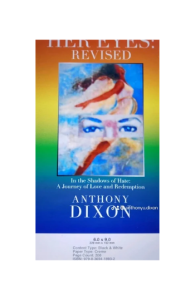
After publishing my first Book I learned that the most pivotal responsibility for your Book Marketing was yours. Hence I am drawn into Social media Marketing. Creating and collecting Videos, of which there are many Downloads. Creating Direct Traffic. Where else would I get to tell People that with Continuous Advertising, you can sell Books. As a sponsored product on Amazon,I get a lot of Impressions, on my website I get 74 percent of the people that visit my website stays and read something. Like the saying goes “I’m loving it. When I started Blogging I never thought that I would have written or Posted 598 Posts.

 www.adixon7611.comhttps://wordpress.com