
Ambition, America, Black History, Dr King, Emotional Intelligence, Helpful Conversations, Inclusion, Life, Motivation, Parenting And Relationships, Self help

Individual thinkers

The Silent Curriculum: What I Wasn’t Taught in School

Introduction

The powerful lyrics of The Cars’ song, “You can’t go on thinking nothing is wrong,” resonate with me now more than ever. These words echo the sentiments I’ve carried for decades, especially when I reflect on my own educational journey. Fifty years have passed, and the realization has dawned on me: the education system failed me. This isn’t just my story; it’s a narrative shared by many who felt that their schooling did not prepare them for the world in all its complexity.

The Shortcomings of Traditional Education

Albert Einstein once expressed similar frustrations, famously noting that his teachers never taught him what he truly wanted to learn. He wasn’t alone in this feeling. In many ways, my experience mirrored Einstein’s. The curriculum was rigid, focused on rote memorization and standardized tests, rather than fostering curiosity and critical thinking. History, in particular, was sanitized, with key parts of our past either glossed over or omitted entirely.

Slavery, for instance, was a seldom-referenced word in all my history classes. The horrors and implications of this brutal institution were treated as a footnote in a textbook rather than a significant part of our nation’s history. If it hadn’t been for a real educator—one who saw beyond the curriculum—I might never have understood the importance of continuous learning or the value of the knowledge that wasn’t readily provided by the system.

The Importance of Lifelong Learning

This educator offered me a piece of advice that has stayed with me: “Even if you decide not to go to college, never stop learning. When you stop learning, you begin the process of dying.” These words, echoed by the wisdom of Einstein, have guided me through life. They motivated me to seek knowledge outside the confines of formal education, to question the narrative I was given, and to discover the stories that were left untold.

It was through this self-directed learning that I came to know about the great Emperor Menelik II of Ethiopia, a leader who successfully defended his country against colonial powers. I learned about Enoch, a biblical figure who is often overlooked in mainstream teachings. And I delved into the life of Hannibal, one of the greatest military commanders in history, whose story was barely mentioned in the classrooms I sat in.

The Need for Open Dialogue

Education isn’t just about the transfer of knowledge; it’s about fostering an environment where ideas can be discussed openly, where grievances can be aired, and where uncomfortable truths can be confronted. In a marriage, if there’s a gripe, it must be discussed. Ignoring a problem is like ignoring a tumor—it only grows, eventually becoming malignant. The same principle applies to education and the way we address our history.

In high school, it wasn’t until 1971 that Black History began to be taught, and even then, the subject matter was vague, superficial, and often sanitized. The silence around slavery and other uncomfortable truths spoke louder than words. This silence was not just an oversight; it was a form of complicity. By not addressing these issues head-on, the education system showed a level of indifference that left many students, including myself, searching for answers outside the classroom.

Silence and Complicity

When it comes to subjects like slavery, silence is more than just a lack of information—it’s a powerful statement. Silence in education amounts to complicity in the perpetuation of ignorance. It shows an indifference to the suffering and struggles of those who came before us, and it denies students the full picture of the world they live in.

The curriculum I experienced was more about maintaining the status quo than challenging it. It was about creating obedient citizens rather than critical thinkers. This is why it’s so important to continue learning, to seek out the stories that weren’t told, and to ask the questions that weren’t asked.

Conclusion

Looking back, I realize that my education didn’t end when I left school; it only began. The gaps in my formal education led me to become a lifelong learner, constantly seeking knowledge that wasn’t readily provided. The words of The Cars, “You can’t go on thinking nothing is wrong,” remind me that we must be vigilant in questioning the world around us, especially the narratives we are given.

Education should empower, enlighten, and challenge us. When it fails to do so, we must take it upon ourselves to seek out the truth, to learn, and to grow. Because when we stop learning, we stop living. And in a world where silence still often speaks louder than words, we cannot afford to be complicit. We must continue to ask the hard questions, to confront the uncomfortable truths, and to learn from the past to create a better future. This type of thinking should overlap our efforts to protect and prolong our great Democracy. Making America great should mean, creating a Nation of individual thinkers, not a Generation of Sheep.


Helpful Conversations, Life, Safe Driving

Preview of my next book

When I started Blogging fourteen years ago. My first Blog was written about Safe driving. Doesn’t surprise me that fourteen years later I would be writing a Book about Safe travels.
When I started Blogging,I promised myself that every Blog would be better than the one before. It’s also my attitude with writing and publishing Books. On my Tax return I list myself as “Publisher” Here are excerpts from my next Book #4

Safe Travels: Driving to Live
To most people, coming upon an accident doesn’t strike a note or nerve; they drive the same way until it’s their turn to be carried away in a body bag. Your job is to avoid people like that by driving as if you are the only one out there who knows what you are doing. There are far too many suicide drivers for you not to take your driving seriously.

The Reality of Dangerous Drivers
Dangerous drivers are a constant presence on the roads. These “suicide drivers” are reckless, inattentive, or overly aggressive, creating hazardous conditions for everyone around them. To stay safe, you must:

Stay Alert: Always be aware of your surroundings. Watch for erratic behavior from other drivers and anticipate their moves.

Avoid High-Risk Drivers: If you spot someone driving dangerously, do your best to distance yourself from them. Change lanes, slow down, or take an alternate route if necessary.

Maintain Control: Keep a firm grip on the steering wheel and stay in control of your vehicle at all times. Be prepared to make quick, defensive maneuvers if needed.

Quality Time on the Road
For me, my commute is quality time. I’m surrounded by fine leather, a Bose stereo system, and a console that prompts me to listen to my text messages or dismiss them. Driving is more than just getting from point A to point B; it’s an experience to be enjoyed. But it’s also a responsibility to be taken seriously.

The Tool of the Road
My car can do 170 MPH. To some, that is a weapon; to me, it’s a tool to avoid mindless drivers setting up accidents. Speed and power are not about showing off; they are about having the capability to maneuver out of dangerous situations when necessary.

Use Speed Wisely: While having a powerful car can be beneficial, it’s essential to use that power wisely. Speed should be used strategically to avoid accidents, not to create them.

Understand Your Vehicle: Know your car’s capabilities and limitations. Familiarize yourself with how it handles in different conditions, so you can make informed decisions when driving.

Drive Responsibly: Always obey traffic laws and speed limits. Use your vehicle’s power to enhance your safety, not to endanger others.

Driving to Live
I am an enthusiast, but most importantly, I drive to live. Safe driving is not just about protecting yourself but also about respecting the lives of others on the road. Here’s how you can adopt this mindset:

Respect the Road: Understand that driving is a privilege, not a right. Respect the road and those who share it with you.

Stay Focused: Eliminate distractions and stay focused on driving. Your car’s features, like a stereo system or text message prompts, should enhance your experience without taking your attention away from the road.

Be Prepared: Always be ready for the unexpected. Keep your vehicle well-maintained and ensure you are physically and mentally prepared for the demands of driving.

Conclusion
Safe travels require a commitment to vigilance, responsibility, and respect. By driving as if you are the only one who knows what you are doing, you can navigate the roads safely, avoiding the recklessness of others. Embrace the joy of driving, but never forget the seriousness of the responsibility that comes with it.

Drive to live, and make every journey a testament to your dedication to safety and enjoyment. Let your vehicle be a tool for good, helping you navigate the dangers of the road while enhancing your driving experience.

I have to Promote my Current Book
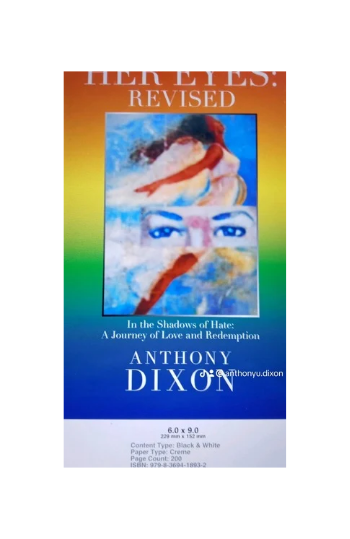
Through Her Eyes Revised
In the shadows of hate a journey of love and Redemption

Ambition, America, Autobiography, Bio, Black History, Christmas, Dr King, Empathy, featured, Helpful Conversations, Inclusion, Life, Motivation, Parenting And Relationships, Religion, Self help, You can face life

Book Description:

Available on Amazon https://a.co/d/aQ3X7wj

Book overview

“In the Shadows of Hate: A Journey of Love and Redemption” is an extraordinary tale that delves deep into the realms of human emotions, exploring the eternal struggle between love and hate. Set in a world consumed by hatred and darkness, this poignant story follows the transformative journey of one man as he navigates through the tumultuous landscapes of prejudice and discrimination, ultimately discovering the redemptive power of love. In this gripping narrative, the author skillfully weaves a tapestry of raw emotions, unveiling the destructive consequences of hatred and the transformative potential of love. The book illuminates the profound need for love, understanding, empathy, and inclusion through vivid and evocative storytelling in our fractured society. At its core, “In the Shadows of Hate ” is a thought-provoking exploration of the human condition, encouraging readers to see life through the eyes of others. It challenges the reader to suspend judgment, look beyond appearances and stereotypes, and embrace diverse experiences’ complexity and richness. The story is a poignant reminder that understanding and compassion can only be achieved by walking a mile in another person’s shoes. With each chapter, the author draws readers deeper into the protagonist’s world, painting a vivid portrait of his internal struggles as he confronts the relentless hate that threatens to engulf him. As the story unfolds, readers witness the power of love as it gradually erodes the barriers of prejudice and bigotry, illuminating a path toward healing and reconciliation. Through compelling characters and gripping plot twists, the author exposes the devastating impact of hate on individuals and communities, leaving no room for complacency or indifference. In the face of adversity, the protagonist’s journey becomes a beacon of hope, demonstrating the resilience of the human spirit and the potential for love to conquer even the darkest corners of our world. “In the Shadows of Hate: A Journey of Love and Redemption” is a profound and profoundly moving exploration of the human capacity for both good and evil. It challenges readers to examine their beliefs and biases, encouraging introspection and fostering greater empathy and understanding. This book offers a compelling testament by spotlighting the universal need for love and its transformative power.”
Read less
Product Details
Available on Amazon https://a.co/d/aQ3X7wj

Through Her Eyes: Revised
In the shadows of hate a journey of love and Redemption

Ambition, America, Autobiography, Bio, Black History, Dr King, Emotional Intelligence, Empathy, Helpful Conversations, Inclusion, Life, Motivation, Self help

Through Her Eyes: Revised

Interactive photos

Chapter Two

Same but different.

Jay always professed himself to be my brother, but he was no brother of mine. Mother died without me giving her credit for her perception of my so-called best friend, whom I considered my brother. She had constantly hammered at me, ‘He is no good; lose him.’ Hard-headed as I was, I stuck with him to the edge of calamity. We were inseparable, as tight as Abbott and Costello, and in almost every class together. After school, we took the Number Four train, where we did our homework to Forty-second Street. From there, we walked to 666 5th Ave, where we worked full-time at a five-star restaurant. There, we jockeyed positions as pastry chefs and grill chefs.

Going to school and working full-time was very taxing, but we didn’t care; it put good money in our pockets which allowed us to dress like pimps and party like we were rich and famous. Besides textbooks, we only read Gentleman’s Quarterly, the leading fashion magazine for men,  Ebony and Jet magazines. We dressed G.Q. going to school; we wouldn’t be caught dead with holes in our jeans; only the poor haters came to school with holes in their clothes. We dressed better than our teachers, who thought we were uppity; we were hated by blacks and whites, all thinking that we were uppity and drug dealers. We had the most extraordinary weed connections; one worked for the airlines and traveled the world; we smoked a lot of it but never sold any.