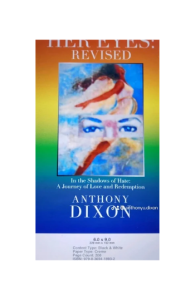
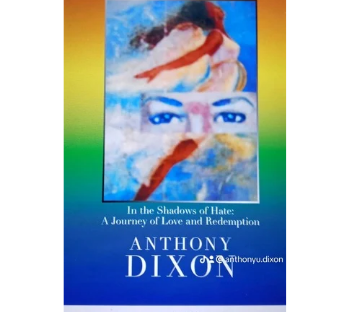
White lies, is not a Book of or about Hate.
It’s a Celebration of Africa and China’s Partnership.
A Celebration of the People, Culture and Resilience of the African Diaspora’s.
Chapter 1:
The Call of My Ancestral Land
“There are no chance meetings” Predestined.
When I moved to South Carolina, little did I know, this was the beginning of my trip back to Africa, Dejavu. I knew there would be a culture shock waiting for me. This state, which was once the epicenter of the slave trade in America, bore the weight of a history that could not be ignored. Every corner seemed to whisper stories of pain, resilience, and survival. The echoes of my ancestors, who had been shackled and stripped of their humanity, were palpable in the humid air. Like Marley said, “There is a natural mystic blowing in the air” The realization that I now lived in a place that had been the major beneficiary of slavery made my connection to the land both intimate and haunting. Living here created a sense of urgency in me—a burning need to dig deeper into the cradle of my being. I felt a pull to understand Africa, not as a distant, abstract concept, but as the origin of everything that made me who I am. I had to unearth the roots of my identity and confront the reality of what had been perpetuated on my paternal land. The devastation inflicted upon my people, culture, heritage, and psyche was not just a distant history; it was a present reality, living here. Shaping my consciousness and my place in the world. The more I learned about the history of Africa—its civilizations, its rich cultures, its vibrant languages—the more I realized the depth of what had been stolen. The cradle of humanity, my homeland, had been pillaged, Spoils of a war that never was. It’s people scattered like seeds across foreign lands. And yet, despite the trauma and fragmentation, there was resilience, and the unbroken spirits that called me back to my roots. As I stood on the soil of South Carolina, I felt the weight of this history, not as a burden but as a call to action. I knew that I could not remain silent any longer. Bob Marley’s words rang in my mind: Could this be love? The question lingered, challenging me to look beyond the pain and devastation to see the love that still existed—love for a homeland I had never seen, love for a people I had never met but felt deeply connected to. It was a love that demanded something of me, a response, an acknowledgment of the bond that transcends time and space. Marley also urged, Say something. In those simple words, I found a call to action. It was time to speak up, to reclaim the narrative that had been stripped away. It was time to say something about the threads that bound me to Africa—threads that had endured despite centuries of efforts to sever them. I knew then that it was my time to speak, to tell the story of my heart’s connection to Africa, to honor my ancestors and the resilience of my people. The most damage to my Psych, watching Tarzan. Tarzan’s “ungawa” was strictly a made-up word when it first appeared in the movies. But by chance, it’s also Swahili, with a couple of meanings, depending on inflection. “To unite” or “to join” is one translation. When I sit down and listen to the artist D Sharp song, “Desire” with the Drummer taking me back to my Village. It gives me back that which was stolen, my Identity and my Culture.





 www.adixon7611.comhttps://wordpress.com