Blog

Safe Driving

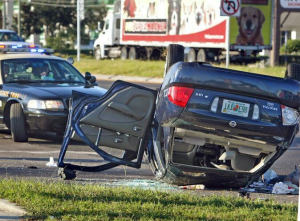
Roadside Graves

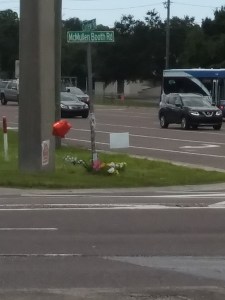
This is no place for a Gravesite Yet I see them everyday, a makeshift Grave for a Loved one who died at that spot. I have seen these Roadside Graves from Erie Pennsylvania to Dallas Texas and every States in between. The first time I started noticing them on the Highway, I thought to myself that someone needed to rest fell asleep at the wheel. Over the years I have come to realize that it’s careless Drivers who creates them. I drove a Truck for many years so I have been more exposed to Road Horrors than the average Commuters. The Department of Transportation and Osha warns of the Dangers of being behind the wheel for too long a period of time for safety reasons. So I must tell you that Truckers driving for eight hours a day do not cause 90% of the Highway and inner city Fatalities. It’s Soccer Moms , people running errands and people driving like Taxi and Pizza Delivery Drivers, and dont forget the thrill seekers who gets behind the wheel and think they are Racecar Drivers.

There is such a vast difference between a Motorist a Driver and a Vehicle operator. Most People on the Road are only operators, they got their Driver’s Licenses on minimal skills and they operate at that level for the rest of their lives. Bad Driving habits are like any other bad habits they are hard to break sometimes you never loose them until they wreck your life. I have known Jane for all of her life and as long as I have known her she was a reckless Driver, over aggressive and heavy foot on the Gas Pedal. I can’t remember how many bad accidents she has been involved in but none of them made her a better Driver.

Her last accident almost killed her, she never mentioned the other Driver involved or whose fault. The gravity of her injuries told me that all who were involved suffered badly. How can one live with oneself knowing that you cause such calamity on the Roadways because of your imbecilic attitude towards Driving.

As the saying goes, it’s a Fool that does things the same way all the time and expect different results. Whenever I pass a bad accident or a Roadside Grave it strengthens me to become a better Driver, most people neither of which phases them that this could be me, I have always tried to learn from other people’s mistakes, I have been Driving for forty seven years with two wrecks that weren’t my fault and every time I get behind the wheel it’s a new learning experience watching my fellow Drivers Driving mindlessly knowing that the Lord looks out for Babies and Fools.

Not only is it the Lord’s job but to stay alive out there you need to be on the constant lookout for them, remembering to drive like you are the only one out there that knows what they are doing. Then you have the ones who think that Buzz Driving is their God’s given right, also the Chronic

Alcoholic who have been Driving impaired for so long it becomes second Nature. Once while working for a Major Corporation my Boss took me to Lunch at a nearby Bar and Grill, before we were seated his lunch was at the Table a double Scotch on the rocks. Before we left he had another and before his long Commute he would have a couple more. I’m quite sure that when he got Home he had another couple, this was his daily routine he had been doing it all his life until one day going home he ended his Life along with three undeserving Motorists.

Billy Martin had been known to drink and drive, one morning while riding with a Drunk they drove down an embankment killing themselves and so another Roadside Grave was created. Today we have an Epidemic of people who can’t even have sex and chew gum at the same time, yet these same people never put down their Cell Phones, oftentimes they are Texting while driving at sixty MPH or better. When they make impact with your Car there is no skid marks. In conclusion I am telling you to always drive like your life depends on it, because it does.

Parenting And Relationships

I Would Rather do it Myself


Oftentimes we impede our Kids growth. We put ourselves exactly where we shouldn’t be: in the middle of their problems. Parents who take on their Kid’s problems do them a great disservice. They rob their children of the chance to grow in responsibility, and they actually foster further irresponsible behavior. The greatest gift we can give our children is the knowledge that with God’s help, they can always look first to themselves for the answers to their problems. Kids who develop an attitude that says, I can probably find my own solutions, become survivors. They have an edge in Learning, relating to others, and making their way in the World. That’s because the best solution to any problem lies within the person who owns the problem. When we solve problems for our Kids-the ones they could handle on their own-they’re never quite satisfied. Our solution is never quite good enough.


When we tell our Kids what to do, deep down they say,I can think for myself, so oftentimes they do the exact opposite of what we want them to do. Our anger doesn’t help either. Certainly, it galls us to no end when our kids mess up something in their own Lives. When they lose school-books or bring home failing grades, it’s only natural for us to explode in a living, breathing Fourth of July display. But anytime we explode at Children for what they do to themselves, we only make the problem worse. We give Kids the the message that the actual, logical consequence of messing up is making adults mad. The children gets swept away in the power of their anger rather than learn a lesson from the consequences of their mistakes. When we intrude into our children’s Problems  with anger or rescue mission, we make their problems our problems. Children don’t worry about problems they know are the concern of their Parents. This can be explained partly by the “no sense in both of us worrying about it” syndrome. Kids who deal directly with their own problems are moved to solve them. They know that if they don’t, nobody will. Not their parents not their teachers- nobody. On a subconscious level, they feel much better about themselves when they handle their own problems.

Excepts from Parenting with Love and Logic


Related Articles

Sean Grover L.C.S.W.

When Kids Call the Shots

The Negative Voices in Your Teenager’s Head

7 ways to quiet them

Posted Jan 20, 2018

This is what a teen might say to you about his or her self-talk:

   “I’m mad. I don’t know why. Sometimes I wake up mad; other days it creeps up on me. I don’t like it. It doesn’t feel good. I wish I wasn’t so mad, but I am. I can’t help it.

   “Every day is a prison, trapped inside this changing body, repeating the same day over and over. My whole life is made up of things I have to do, not things I want to do. Tests, quizzes, reading assignments, papers, group projects — I spend the entire day with people I am forced to be with: teenagers who feel just as messed up as me.

   “Sometimes my feelings get hurt at school — by teachers, deans, counselors, but mostly by other students. I don’t tell you this, because I’m ashamed to feel hurt. I don’t want you to know how hurt I feel all the time.

   “My whole life has become ‘I don’t want to…’ I don’t want to wake up. I don’t want to go to bed. I don’t want to go to school. I don’t want to…I don’t want to…I don’t want to.

   “I can’t think of a single thing that I want to do — except sleep. It’s the only time I’m not stressing, the only time I’m not worried, the only time I’m not upset.

   “Sometimes I hide in my room and binge watch Netflix, YouTube, or mindless videos over and over, because I can’t stand to be with my own thoughts. I’m distracting myself from me. Does that sound crazy?

   “And, yes, I know that my room is a mess. I like it that way: It looks how I feel inside. And please don’t ask me what’s wrong, because I don’t know. I don’t know where these feelings came from.

   “I know that you’re mad at me. I can’t blame you. I stopped talking to you. Sometimes I say such mean things to you, horrible things. I blame you, curse at you, push you away. Sometimes I break things, because I feel broken inside.

   “It wasn’t always this way. When I look at old photos of me in elementary school, I see a little kid who was so happy all the time. A little kid who loved to dance and sing, who loved to be silly, who didn’t care what people thought.

   “I feel like that little kid is dead.

   “I’m going to tell you something now that’s hard to say. Please listen, because I really mean it: Don’t give up on me. Don’t hate me back. I need you to be stronger than me. I need you to be my parent, even though I say I don’t want one. I need you to be more patient than I can be, more understanding, more accepting. Even when I am yelling at you, even when I tell you that I hate you, I still need you to love me.

   “If I could tell you how to help me, this is what I would say:

1. Give me space.

Don’t come in my room, corner me, or make demands. I don’t have any answers. When you push me or yell at me, I feel worse. I need to be alone. I need space.

2. Don’t yell at me.

The noise in my head is so loud sometimes that I can barely hear my own thoughts. I can’t stand it. When you yell, I feel worse about myself. I feel unloved. I feel like I am your biggest disappointment.

3. Take my electronics away.

I can’t put my phone down; I try, but I just can’t. I know it’s devouring all my time, but I can’t help myself; I can’t stop checking it. I need your help. I need you to set limits on technology. Please. I will fight you, but it’s what I need. Don’t try to reason with me: Just do it.

4. Bring me someplace quiet.

I say I don’t want anything to do with you. But if you could bring me somewhere quiet, somewhere we could walk together and not argue, somewhere I can feel the sun and listen to the wind in the trees, somewhere I can breathe and forget about everything that’s bothering me, I think I would like that. Even if we don’t speak, I will feel comforted.

5. Stop spoiling me.

Stop giving me everything I want. The more you give me, the more I resent you. I want to earn things. It helps me feel grown up. I want to learn how to save money, spend money, share money. And I’m never going to learn that if you keep giving it to me. I hate being dependent on you; please help me become independent.

6. Find me someone to talk to.

I need someone to look up to who isn’t you. I need an adult to admire, someone I want to be like, a person who believes in me, who pushes me, and who understands me. A mentor, a counselor, a therapist…anyone who can give me hope when I have too little for myself.

7. Tell me that you love me.

I pretend not to care. But I really need to hear you say the words, ‘I love you.’ Because right now, I don’t love me. Even though I’m making your life hell, I still need to feel loved. Especially by you.

   “I guess that’s it. I know that being a parent is really hard. Sometimes you probably wonder why you did it. But I’ll get better. I promise. I’ll get older and we’ll enjoy each other again. Until then, understand that I appreciate you.

   “I may not say it often, but still I love you.”

More on the Subject

At what point in life that we all come to the Crossroads that we know everything and that we are no longer reliant on your parents knowledge, which have brought you to the point you are now, ready to take on Life on your own. That happened to me when I was fourteen, whatever that was said to me in my little mind, didn’t relate to me because I was going to do exactly as I wanted to do. A Rebel without a cause, on a one-way track on a runaway Train heading to who knows where, many Teenagers like me end up on the Streets, in jail or Dead. My message, the power is in you,  coming to your Crossroads and making your own choices, preferably the right ones. Ask yourself 20 questions, one of which is this me in 5 years. Teenagers know everything except to project  years down the Road. Five years is a lifetime locked up.

My Mother wouldn’t hear of that, if necessary she would do my prison time. Only a Fool who don’t recognize acts of kindnessnes. That was enough to change my way of thinking and began taking on responsibility. Once again I beg you don’t do stupid things like I did, like smoking Weed at fourteen. The rest of your Life is in your hands.


P.s. momma may have Papa may have but God bless the Child that’s got it all together for himself.


Life, Parenting And Relationships

Mother’s Little Helper


Josie was born Gifted,  she possessed great Love understanding and Empathy, whenever others around her was sad so was she, when they hurt so did she. Her childhood in rural Pennsylvania was filled with bliss, far away from Urban life, nestled in luscious nature was all she needed to grow and flourish. And so did she transcending into the most tranquil of adolescents. Her Parents were overwhelmed with her matured mentality, her attitude of total bliss with her existence. This Child’s Godliness behooved the local Ministry. Her Congeniality with all God’s creatures Humans and Animals alike, mystified even the Fawns that came looking for her at the break of Dawn, while she tended her Vegetables. In School everyone wanted to be close to her, in her presence there was always serenity and control.


At twelve years old the maturity she exhibited was uncommon for her counterparts. At Home she emulated her Mother as a Homemaker, never to be told to do chores. Work ethics beyond a seasoned team player, always filled in whenever needed. When  mother was sick she was the Woman of the House. At twelve years old she cooked cleaned and sewed like a pro. All this talent from being a Mother’s Helper that was a quick learner. Joan her Mom was from the old School, she believed that Kids should not be babied, but be given the tools they need to live as early as possible. Good hygiene, Homemaking and People skills were a must. So it’s no wonder that at age twelve Josie was now prepared to take over the job of running the Household with Mom’s failing Health. As Joan’ s health progressively deteriorated, she was filled with pride and sorrows. Proud of her Daughter’s maturity, sad to know that she was leaving this Beautiful Angel to finish the job of raising herself, and keeping her Dad from giving up on Life.


Joan’s Passing left a huge void in everyone’s life, most of all her Husband, to him the blow was devastating. He progressively withdrew from  Life, he barely maintained his Job with the strength and encouragement from Josie. She was the Pillar of his sanity, a constant reminder of her Mother, which made things easy and hard. Her devotion to mentally nourish Dad back to Life was an unbecoming talent of anyone child or adult. When her Father locked himself in his room of depression, she would bring him out with gentle levity, like excuse me sir have you seen my Dad. He immediately knew what she was saying and responded with gratitude and Love. Without this kid’s tenacity to give and to Love he would not have been able to overcome the loss. With Josie around he had no need to run for the shelter of Mother’s Little Helper.


Life, Parenting And Relationships

My Hero

I am no Hero worshiper, when I was eighteen I saw a beautiful Rolls Royce parked on fifty third St. While admiring the beautiful red and black interior design, the owner approached his car. I immediately recognized him, showers him with praise and asked him for his autograph. The Oxymoron looked at me like I did not exist, the same fool who used to buy tickets to watch him play Basketball, so he could afford the Rolls. Another time on the same Street, my all-time favorite Movie Star struggling with a big Box up the stairs to her Townhouse. I asked her if I could help her, I also asked for her Autograph, she looked at me as If I was going to Rob and Rape her, she didn’t utter a word, no thanks, get away from me, just a look of disdain. I guess I would not be invited to Dinner. Well that was it for my Hero worshiping for the rest of my life. As far as genuine Heroes who steps up in the most adverse of situations and risk their own Lives to save others, GOD BLESS. Then there are People who life has been un giving and un timing. Yet they devote the little time given them, to share an un Dimmable light of Hope and Resilience.

Mattie Stepanek has touched my Soul.

‘Mattie’s message touched the world’: The story of a boy poet

In his brief life Mattie Stepanek befriended Oprah Winfrey and former US President Jimmy Carter, and his poetry spoke to millions of ordinary people. His mother Jeni talks to Catherine O’Brien about her extraordinary son whose life was cut short by a rare form of muscular dystrophy

Mattie Stepanek

Mattie and his mother Jeni at his first book signing in 2001

Jeni Stepanek’s home is an attractive four-bedroomed house with a white picket fence. Had it been a dilapidated, one-roomed shack, however, Jeni would still have bought it. The only factor that mattered when she moved in four years ago was its location – opposite the entrance to the 26-acre park in Rockville, near Washington DC, created in honour of her son Mattie.

The park has play spaces, but at its heart is a memorial peace garden with a life-size bronze statue of Mattie and his dog Micah. ‘Every day, I sit at my window and see mothers go over to the statue with their children,’ says Jeni. ‘If they press a button on the speaker post, they hear a recording of Mattie’s voice. It is a terrible thing for a parent to bury a child, but I do have the blessing of seeing how Mattie has touched the world.’

Jeni is a mother who has endured more grief that most of us could bear to imagine. All four of her children were born with a genetic disorder – a rare form of muscular dystrophy. The first three, Katie, Stevie and Jamie, died before the age of four. Mattie survived until three weeks before his 14th birthday and in that brief lifespan became an international phenomenon, selling more than two million copies of his poetry collections and giving inspirational speeches to thousands of followers. His heroes – Oprah Winfrey, poet Maya Angelou, former US president Jimmy Carter – became his best friends. At his funeral Carter gave the eulogy, declaring, ‘My wife and I have known kings and queens, and we’ve known presidents and prime ministers, but the most extraordinary person whom I have ever known is Mattie Stepanek.’

You do not have to spend long with Jeni to understand where Mattie got some of those extraordinary qualities. Six years after her youngest child’s death, Jeni works tirelessly in his name, overseeing fundraising for medical research into neuromuscular diseases, teenage mentoring programmes and peace projects in 18 countries, including the UK. She does all this despite having the adult onset of the disease that developed when Mattie was two years old; today her health has deteriorated to the point where she is wheelchair-bound and permanently attached to a ventilator.

‘I am not paralyzed. I can move every part of my body – but I do not have the strength to move against gravity. I can bring my hands together, but I cannot clap. I can raise my hand to my mouth, but I have a difficult time feeding myself,’ she explains.

Mattie Stepanek

Mattie with his dog Micah, 2002

In the year after Mattie died, part of Jeni’s catharsis was to write about his short but significant life. ‘I hesitated,’ she says, ‘because I didn’t want my grief to spill over on the page and nor did I want people to think I was hanging on to Mattie’s coat tails. But I knew in the end I would tell the story – because I was the only one who lived it with him.’

Jeni’s now published book Messenger is a celebration of Mattie’s remarkable achievements and wisdom that was way beyond his years. But it is also the story of a mother and son who were living in the shadow of grief. ‘Mattie was not my therapist or confidant – that was not our relationship. But we were incredibly close,’ she says. She describes them as a ‘dynamic duo’ and throughout there is a sense that it was she and Mattie against the world – not least because there is almost no mention of Mattie’s father, from whom Jeni separated in 1997. Mattie once told the American TV chat-show host Larry King: ‘We’re divorced from my father because he did some mean and scary things to us.’ Today, Jeni says, ‘I prefer not to talk about it, but I think my silence speaks volumes.’

Now 51, Jeni grew up in Maryland, where she still lives, in Rockville. She is as reticent about her own family background as she is about her husband. ‘It’s sad, but it is not the story I am telling.’ She does explain, however, that she was training to be a clinical child psychologist when she married aged 25 and became pregnant with her first child Katie, who was born four weeks prematurely, in 1985. Katie came out not breathing, was rushed straight into special care and ‘it was my sudden immersion into the next 20 years of my life’. Although Katie did eventually walk and talk, she couldn’t breathe normally and was fitted with a tracheostomy tube connected to a ventilator. She died suddenly at 20 months when her kidneys and bladder stopped functioning. Her condition was never diagnosed – doctors told Jeni she was a ‘fluke of nature’ and assured her that it was safe for her to have more children.

I give my mommy ‘Buried treasure’ Just like the little boy in Peter Pan. But I can’t give my mommy ‘Buried Jamie’. He is in the Heaven That is the hole in the ground, Like a treasure

Written by Mattie when he was four

Her second child Stevie seemed fine when he was born, just two months after Katie died. But within three days his heart rate was falling rapidly, and by the time he was three months he was permanently attached to a ventilator. He died at six months when one of his oxygen tanks malfunctioned, leaving him without air.

After Stevie’s death, Jeni underwent genetic and emotional counselling. Doctors couldn’t identify what had killed her babies, but realised it was caused by a recessive gene, which, in theory, should mean that there was only a one-in-four chance of giving birth to a child with the then unnamed condition. She and her husband decided to risk another pregnancy and Jamie was born in February 1989, tragically with the same health problems. ‘At one minute after birth I had a bouncing baby boy,’ Jeni recalls. ‘At five minutes, I had a floppy newborn.’

She resolved firmly to have no more children, only to find herself pregnant again within the year. She considered abortion but, as a devout Catholic, couldn’t go through with it. Mattie was born in July 1990. Jeni ignored medical professionals who suggested she put him in an institution, and consequently for almost two years lived on the edge of exhaustion, juggling long stays in hospital with either or both of her surviving sons.

In 1992 a doctor looked at Jeni’s drooping eyelids and, suspecting that they were a symptom of neuromuscular disorder, suggested she underwent testing of her own. Only then was the rare and poorly understood genetic mutation that she had passed on to her children identified. Dysautonomic mitochondrial myopathy affects the autonomic nervous system, which means automatic functions, such as digestion and body temperature, can suddenly go haywire and, at any time, the body might simply fail to breathe. The exact mutation was so rare that Jeni and her children are the only ones in the world who have been identified with it. The good news, doctors told her, was that they now had a medical explanation, ‘and the bad news was that all my children were going to die young’.

Jamie survived until three and a half before passing away peacefully in his sleep. Mattie was two when Jamie died, and a school psychologist suggested to Jeni that she put away Jamie’s belongings so that Mattie could ‘forget and grow up without the memory’. It was the worst possible advice. Within two months, Jeni recalls, ‘my loving child was banging his head against the wall, screaming and tearing pages out of books’. To help assuage his anger, she took out a pen and paper with him and wrote ‘The Story of a Very Special Brother’. They talked about Jamie and what it was like to feel sad after he died. Jeni collected Mattie’s thoughts and pasted them into a book, ‘and those were his beginnings as a writer as he learned about the value of getting onto the page what was in his heart’.

Let this truly be The celebration of A New Year… Let us remember The past, yet Not dwell in it. Let us fully use The present, yet Not waste it. Let us live for The future, yet Not count on it

Written by Mattie, aged 11

On a superficial level, Mattie was like every other little boy who loves playing with Lego and dinosaurs. But he was also a profound thinker who rapidly developed a powerful way with words. From the age of four, he was composing poetry; by six, he had won his first poetry competition. He called his poems ‘Heart Songs’ – a term he coined to describe his passion for peace that he wanted to pass on to others. By the age of nine he had bound his Heart Songs into five home-made volumes.

Mattie’s poems illustrate his optimism but they also reveal that he was often in a vulnerable place. His brother had died, his father had gone and his mother was in a wheelchair like him. At the mainstream school he attended he found himself, like many disabled children, in the isolated position of being everybody’s pal and nobody’s friend. His friends’ mothers were too nervous about his medical needs to have him over for playdates and he was often the one child not invited to parties.

Jeni was experiencing similar isolation for different reasons. ‘It’s lonely being the mother of dying children,’ she explains. ‘You can’t share normal milestones with other mothers. People either want to solve the problem, which they can’t, or they want to leave when the situation becomes too difficult. Watching children die is hard.’

Mattie Stepanek

Mattie meeting the Harry Potter actors on the set of Oprah in 2001

At ten, Mattie was admitted to hospital with acute breathing problems. He went into a coma, almost died and spent three months in intensive care. When he finally made a tentative recovery in the summer of 2001, a doctor suggested that they spoke to a make-a-wish charity about providing Mattie with a much-deserved morale boost. Mattie’s wishes didn’t fall into the conventional realms of meeting a celebrity or a day at a theme park. He had three specific wishes – he wanted to publish at least one volume of his poetry to spread his message of hope; he wanted to talk to Jimmy Carter, whom he had admired as a peacemaker since writing an essay about him several years earlier; and he wanted to share his Heart Songs on Oprah Winfrey’s television show.

The doctor spoke to the hospital’s public relations department. A few days later, a PR rep came on to the ward and said that staff needed to get a phone to Mattie’s bedside immediately, because Jimmy Carter was going to be calling in ten minutes. ‘Mattie could not believe one of his three wishes was going to be granted,’ recalls Jeni. Carter had anticipated the typical ‘What was it like to be president?’ questions. Instead, he found himself debating the challenges of world peace with a highly intelligent 11-year-old.

The granting of wishes two and three followed. A local publisher was shown Mattie’s poetry and signed him up for his first book contract. Then, shortly after Mattie was discharged from hospital, Oprah invited him to be a guest on her show. Her team arranged for him to be flown to Chicago by air ambulance and booked into a hotel suite. ‘We had never known luxury like it,’ says Jeni.

Mattie’s appearance on Oprah took place weeks after 9/11. He read his poems, spoke to millions of viewers about his own near-death experience, and described the beauty of the heaven he’d glimpsed as ‘beyond imagination’. ‘The world was hungry for a message of hope in those weeks, and Mattie supplied it,’ Jeni explains.

The moment the interview aired, Mattie found himself projected onto the world stage. In the ensuing months he gave scores of television and newspaper interviews and met another of his heroines, Maya Angelou, who offered to write the foreword for his next book. Bill Clinton and J K Rowling were among those who corresponded with him. Oprah bought him a van specially adapted and equipped for Mattie and Jeni’s medical needs, so that they could tour America giving speeches and attending media events. ‘Spending as many as 12 hours a day in the van brought us even closer,’ says Jeni. ‘We would play silly games, tell jokes, and talk and talk. Mattie was never anything but my little boy, and I was never anything but his mum. But we were able to relate beyond that because we both knew how fragile existence is.’

A champion is… Someone who overcomes challenges Even when it requires creative solutions. A champion is an optimist, A hopeful spirit… Someone who plays the game, Even when the game is called life… Especially when the game is called life

By Mattie, aged 13

When Mattie turned 13, Jeni noticed a young man’s face emerging and his fair hair becoming darker. ‘But when I gave him a hug he was so thin. He was growing up and dying simultaneously.’

Early in 2004, Mattie’s health went into sharp decline. He died in hospital in June that year with Jeni lying alongside him to feel his final heartbeat. Local television stations interrupted programming to announce his death. At his funeral the following week, thousands lined the streets.

Then Jeni went home with her close friend Sandy, who has been her lifeline for the past 20 years. Jeni regards Sandy as her unofficial ‘sister’ and Sandy’s children regard Jeni as family. For a long time they were neighbours; now they share the house that overlooks Mattie’s memorial park.

It is impossible to fully contemplate the sorrow Jeni experiences as a mother without her cherished children. ‘I don’t think I ever felt anger. And I don’t think that I ever said, “Why me?”’ she says. ‘I did, however, say I can’t go on. I have been as far into the abyss as it is possible to go.’

Mattie Stepanek

Oprah Winfrey admires the bronze statue of Mattie in the Maryland park named in his honour, 2008

She remembers the second year after Mattie died as being particularly hard. ‘After the first year, the rest of the world moves on – and all the while you are getting more and more distant from your child and feeling lonelier and lonelier.’

Her own health has deteriorated significantly. She went on to a full-time ventilator three years ago and her fading vision means that she can no longer drive. But she remains stridently independent. The key thing, she says, is to have a reason for getting out of bed, and every day she wakes up with the resolute purpose of continuing Mattie’s legacy. Mattie’s Heartsongs are now part of school curricula, scholarships are given in his name and a school in South Africa has been named after him. An annual Heartsongs Gala in Washington has raised millions of dollars, while further funding has gone into children’s hospices.

In truth, Jeni concedes, there was nothing particularly original about Mattie’s message. ‘It was simply, “Live your best life, be your best self, give what you wish to receive.”’ But it was the way he delivered it that struck such a chord.

‘His attitude was that you can’t change what life throws at you, but you can choose how you deal with it – and if you choose right, you will make a difference. Whenever I am feeling miserable I remember that and it gives me the inspiration I need to face the day.’

Messenger: The Inspiring Story of Mattie J T Stepanek and Heartsongs by Jeni Stepanek is published by Hay House, price £9.99. To order a copy for £8.49, with free p&p, contact the YOU Bookshop on 0845 155 0711, you-bookshop.co.uk

At adixon7611.com We believe that Great Spirits are Indomitable.

P.S. Matthew 19:14 ►

Jesus said, “Let the little children come to me, and do not hinder them, for theirs is the kingdom of Heaven.
Life

Blogging


One Reader asked how do I compose myself to write. When I sit down to write it depends on what is going on in my mind. If something is pressing in my thoughts writing blogs about it is easy, I hold a pen and it’s like my thoughts control my hand. Many times I have written a blog without having to stop and think about what goes next. That’s because what’s on my mind whether voluntarily or involuntary, it comes out either verbally or literary  that’s what  writing is about, not researching others work and putting it to your words. When you do that you’re transcribing.


Blogging is a true form of self expression. What I like most about it is that I can write about people without sounding like a gossip columnist, people make the most interesting subjects, because they are the subject. They go from the very best to the very worst, as the saying goes People makes the world go round. I could be wrong but I believe that when you excel, you are obligated to set standards, especially if you are in the public’s eye or trust. For instance a business Manager, a public accountant or handling public Funds. Let’s not forget about famous Comedians and Movie Moguls. But as the  story goes People will always be who they are, untrustworthy and down right Thieves, like the Bank Teller who stole a Nickel,  Dime, quarter and so on from every stack until apprehended a hundred thousand dollars later.


They never cease to amaze me and that’s why I will always have something to say. Years ago there was the Dentist who while his Patients were compromised by aesthetics he would further compromise them with a lot of foreplay and hand Jobs, they would wake up hot and bothered. Now he’s sitting in a Jail cell being bothered by his Cellmates. When I was sixteen I could smell the Gin on my Dentist breath while he butchered me scaring my psych for life. How is that for  Hippocratic. Then there was the Pharmacist who turned up dead and buried in Hugo Selenski’s backyard along with two or more known Drug Dealers, coincident? in all likelihood he was a supplier. I knew Hugo casually never asked him what he did for a living.  I would sit and talk about Horses at the Race Track with Hugo, never taught that ten years later I would be writing about him.


Authorities have wanted to nab Hugo Selenski on murder charges ever since they searched his northeastern Pennsylvania yard in 2003 and found the bodies of a missing pharmacist, the pharmacist’s girlfriend, and at least three other sets of human remains.

It took nearly a dozen years and one failed prosecution, but they finally got their man on Wednesday after a jury convicted the 41-year-old career criminal in the strangling deaths of pharmacist Michael Kerkowski and Tammy Fassett.


Hugo Selenski convicted of murder after bodies of at least 5 people found in yard


People give me things to write about. A Blog about Hugo is in the works, if you read my other Blogs you will see that I have known many people who are newsworthy. So there you have it in a Nutshell, there is always someone waiting around the corner to be written about.


Related Stories about unscrupulous people.


Currently, laws in place to protect child actors and their finances leaves 85% of their earnings up for grabs. And children who appear on reality television shows are, currently, not protected in any way.

Unfortunately, child actors from Hollywood’s past had to learn the hard way that not everyone is looking out for their best interests. Here are child actors whose parents squandered their fortunes.

Macaulay Culkin

A child star that the media continues to keep up with is Macaulay Culkin. The cute, fresh face of “Home Alone” stardom has appeared in a number of indie films over the years. But Culkin’s personal life has kept him in the headlines as well.

Culkin’s parents divorced in the late 90s, placing Culkin and his multimillion dollar fortune directly in the middle. After a bitter custody dispute and a fight for control over Culkin’s trust, the family accountant was put in charge until Culkin reached adulthood.

Culkin and his parents are, at present, estranged. But Culkin is no stranger to tabloid headlines. He was in a nine-year relationship with actress Mila Kunis. But after their breakup, Culkin’s health and alleged heroin addiction has come under fire.

Jackie Coogan And The Coogan Law

Discovered by Charlie Chaplin, Jackie Coogan’s appearance in “The Kid” launched a career that would span over fifty years. He had made 19 films before his 18th birthday. And became one of the first heavily merchandised celebrities.

It’s estimated that, as a child star, Coogan made nearly $4 million. Little did he know that his mother and stepfather had squandered his wealth. His mother felt that because Coogan had earned his fortune as a child, she and her husband were entitled to spend the money however they saw fit. She stated, “No promises were ever made to give Jackie anything. Every dollar a kid earns before he is 21 belongs to his parents.” Coogan sued his parent in 1938. And after legal fees, was awarded a mere $126,000.

Coogan’s case got the attention of California local and state governments. And California Child Actor’s Bill, more widely referred to as The Coogan Law, was born. While not perfect, the law requires that a child actor’s employer set aside 15% of the earnings in a trust and codifies work hours and vacation time.

Shirley Temple

Retired from acting at 22, Shirley Temple was one of the most recognizable names and faces in cinema. Starring in 44 films before the age of twelve, Temple was 20th Century Fox’s biggest box office draw in the 1930s.

Her mother received $250 a week stipend from the studio. And Temple, as a child, only saw less than $20 in pocket money. At the peak of Temple’s career, she commanded $10,000 a week.

So, you can imagine the surprise of Shirley Temple, an adult at the time, when she discovered her accounts only showed $44,000 instead of the $3.2 million she had earned. Her father had allegedly failed to place her earnings as a child star in a court-ordered trust.

Mimi Gibson

In a decade, Mimi Gibson appeared in 35 films and over 100 TV programs. She has been cast opposite Cary Grant, John Wayne and Maureen O’Hara. However, her finances had been substantially dwindled by Gibson’s mother. So much so, that she did not have enough saved for college tuition.

In 1999, Gibson sponsored a California bill that, currently, only allows the trust to be withdrawn from when a minor turns 18. She currently lives a very guarded and private life away from Hollywood.

Gary Coleman

Best remembered for his role as Arnold Jackson in “Diff’rent Strokes,” Gary Coleman’s relationship with his parents was severely strained. In 1989, Coleman sued his parents and a financial advisor for misappropriating his multi million fortune amassed from the popular TV sitcom. He was awarded $1.3 million, but his later life was plagued with personal and professional misfortunes.